


Why Remote Technology Cybersecurity Must Be A Top Priority For Your Business
Remote technology has become a cornerstone of how we work, support customers, and manage IT infrastructure.
From remote desktop tools to cloud-based collaboration platforms, businesses now depend on these systems for speed and convenience.
But with convenience comes risk. Cybercriminals are increasingly targeting remote access technologies — not just to disrupt operations, but to infiltrate networks, steal data, and hold organizations to ransom.
The latest example, Windows Remote Desktop's CVE-2025-53722, underscores how even trusted tools can become high-risk attack vectors overnight.
The Latest Remote Desktop Flaw
CVE-2025-53722 is a newly disclosed vulnerability in Microsoft Windows Remote Desktop Services that can be exploited remotely without requiring attacker privileges or user interaction.
According to the National Vulnerability Database (NVD), this flaw allows unauthorized actors to overwhelm Remote Desktop Services by consuming critical system resources, effectively triggering a denial-of-service (DoS) condition.
When exploited, the service becomes unavailable to legitimate users, cutting off access for employees and IT teams who depend on remote desktop connectivity for daily operations.
For businesses — especially those with distributed workforces or high remote access demands — such disruption can halt critical workflows, delay customer support, and cause significant operational and financial damage.
The Pattern in Remote Access Vulnerabilities
CVE-2025-53722 isn't an isolated incident—it's part of an alarming trend targeting remote access infrastructures:
- → Zero-day exploits are increasingly targeting remote protocols
- → Session hijacking techniques are becoming more sophisticated
- → Cloud misconfigurations create new attack vectors
- → Supply chain attacks through compromised remote tools are rising
The critical lesson?
Reactive patching isn't a comprehensive defense strategy. Organizations need security-first solutions that assume vulnerabilities will continue to emerge.
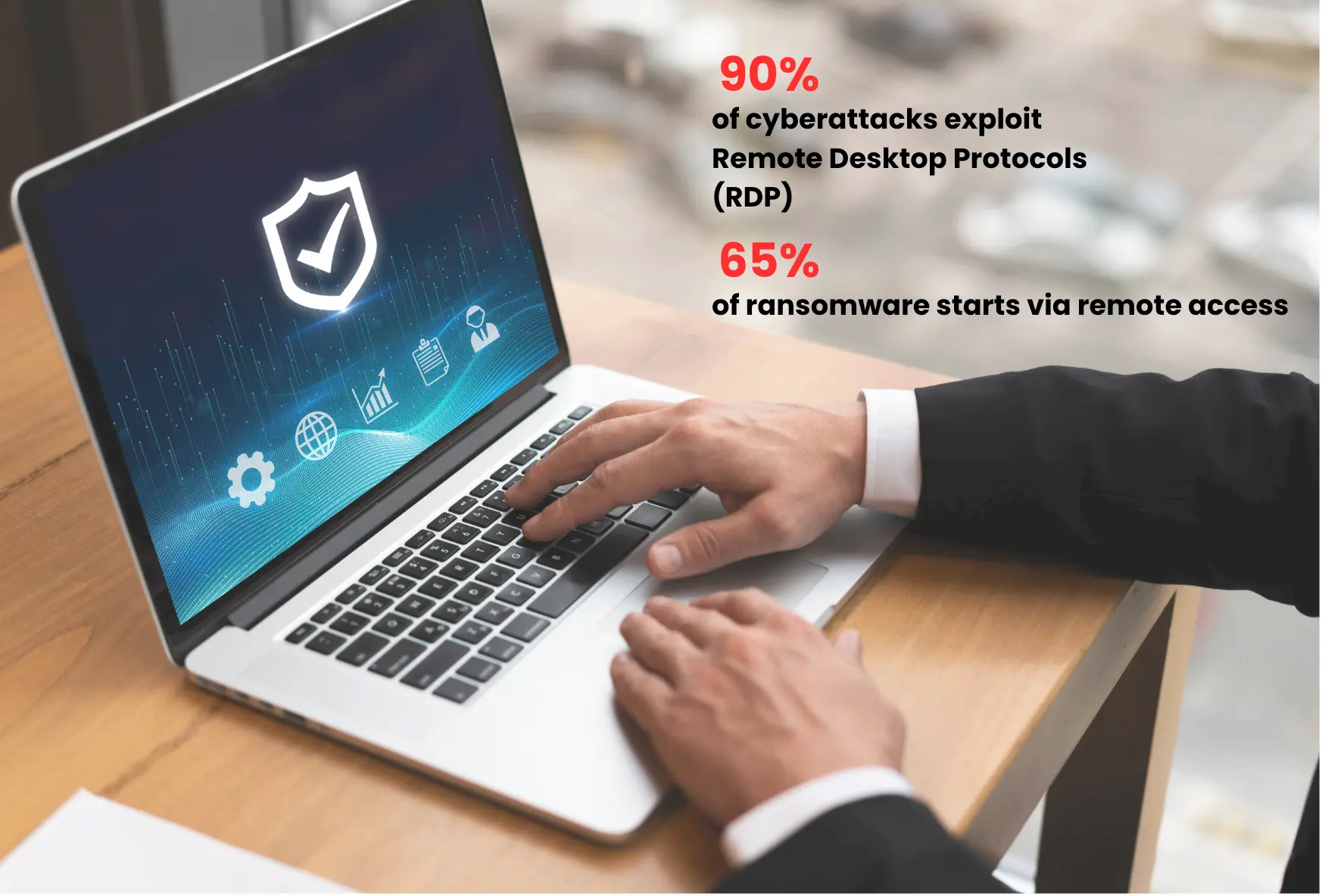
What Secure Remote Access Looks Like
Building resilient remote operations requires multiple security layers working in concert:
Key Benefits:
- 1. End-to-End Encryption: Enterprise-grade AES 256-bit encryption for all data transmission, with SSL/TLS certificates for secure connections.
- 2. Multi-Factor Authentication: Every session requires multiple verification factors, eliminating single-point-of-failure authentication.
- 3. User Consent Protocols: Explicit permission requirements with visible session indicators ensure transparency and prevent unauthorized access.
- 4. Zero-Trust Architecture: Every connection attempt is verified, regardless of location or previous authentication, with role-based access controls limiting permissions.
- 5. Comprehensive Logging: Complete audit trails enable compliance adherence and security incident investigation.
RemoteCall: 20+ Years of of Incident-Free Secure Remote Support
For over two decades, RemoteCall has delivered secure, reliable remote support without a single security incident. This track record isn’t luck — it’s the result of uncompromising design and security practices:
- ✓ Enterprise-Grade Encryption: All sessions use 2048-bit SSL and 256-bit AES encryption.
- ✓ User-First Security: Customers must approve each session, with clear visual indicators throughout.
- ✓ Granular Access Control: Role-based permissions ensure only authorized support actions are possible.
- ✓ Global Data Center Compliance: Meets international privacy and data protection standards.
RemoteCall’s 20+ years of incident-free service prove that remote support can be both fast and safe — without sacrificing user trust or operational agility.
Your Action Plan for Remote Technology Cybersecurity
IT leaders can't afford to wait for the next vulnerability disclosure. Here's your immediate priority list:
- 1. Audit current remote access tools for security gaps and unnecessary exposure
- 2. Evaluate proven solutions with demonstrated long-term security track records
- 3. Implement security training to help employees recognize and avoid threats
- 4. Test incident response plansspecifically for remote access breaches
Securing the Future of Remote Technology
CVE-2025-53722 is just the latest reminder that no remote technology is immune to cyber threats. The organizations that thrive in today's remote-first world are those that choose security-proven solutions over reactive patching strategies.
With a 20-year incident-free history, RemoteCall stands as proof that security and performance can go hand in hand. The question isn’t whether your organization can afford better cybersecurity — it’s whether you can afford to go without it.
Ready to experience truly secure remote support?
Learn how two decades of incident-free service can protect your business against current and future threats.
Transform Your Support. Connect with RemoteCall.
Want to know more about RemoteCall?
- Explore Industry Use Cases → Explore Case Studies by Industry
- Subscribe to our Newsletter → RSUPPORT Report on LinkedIn